
Blogs
24-06-2026
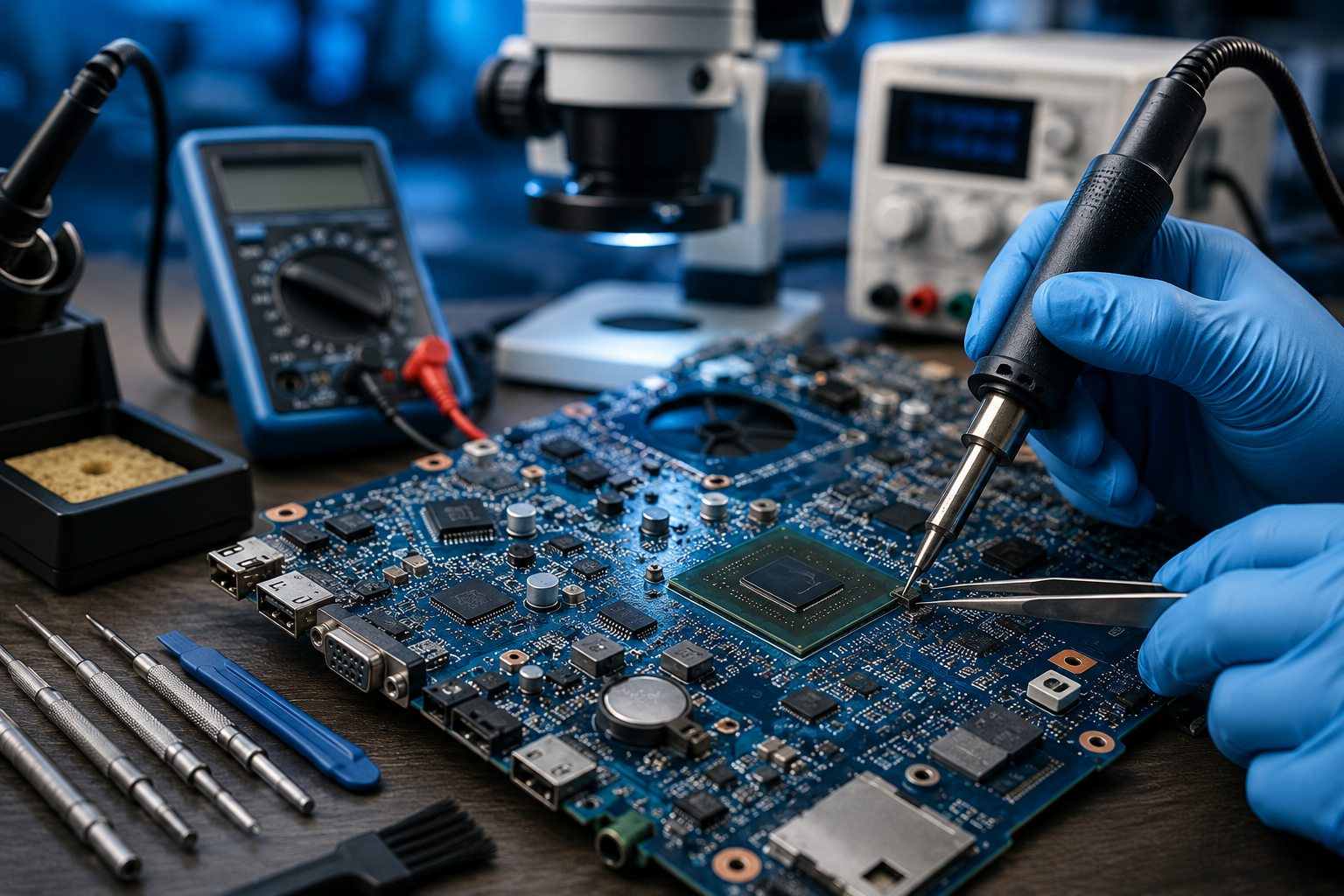
The demand for skilled laptop repair technicians is increasing rapidly as laptops have become an essential part of daily life, education, and business. While basic laptop repair skills are useful, professionals with advanced chip-level expertise are highly sought after in the electronics repair industry. A Laptop Chip Level Course provides in-depth technical knowledge and practical training to diagnose and repair complex motherboard faults, making it an excellent career choice for aspiring technicians.
Whether you want to start your own repair business, secure a high-paying technical job, or upgrade your existing repair skills, enrolling in a professional laptop chip level training program can help you achieve your goals.
A Laptop Chip Level Course is an advanced technical training program designed to teach students how to repair laptop motherboards and electronic circuits at the component level. Unlike basic hardware courses that focus on replacing faulty parts, chip-level training helps students identify, troubleshoot, and repair individual electronic components.
Students learn to work with:
Laptop motherboards
ICs (Integrated Circuits)
Power management circuits
BIOS chips
SMD components
Charging sections
Display circuits
Short-circuit troubleshooting
The course combines theoretical knowledge with extensive practical sessions to ensure students gain real-world repair experience.
Laptop usage continues to grow worldwide, creating a consistent demand for qualified repair technicians. Companies, service centers, educational institutions, and businesses frequently require professionals capable of handling motherboard-level repairs.
Chip-level technicians often earn more than basic hardware technicians because their skills are specialized and difficult to replace.
After completing a laptop chip level course, many students start their own repair shops, service centers, or freelance repair businesses.
Organizations prefer chip-level repairs because they are often more affordable than replacing an entire motherboard.
A professional training program covers various advanced topics, including:
Students learn the internal structure and functioning of laptops, including:
Motherboard layouts
CPU architecture
RAM functionality
Storage devices
Chipset operations
Understanding electronic components is essential for successful repairs.
Topics include:
Resistors
Capacitors
Inductors
Diodes
Transistors
MOSFETs
ICs
Students learn how to read and analyze motherboard schematics to locate faults quickly and accurately.
Training includes:
Voltage testing
Continuity testing
Resistance measurement
Current analysis
Students gain practical knowledge in diagnosing:
Dead laptops
No display issues
Charging problems
Overheating faults
Power failures
Short circuits
The BIOS controls essential laptop functions. Students learn:
BIOS architecture
BIOS flashing
BIOS backup and restoration
BIOS corruption repair
Modern laptop motherboards contain tiny surface-mounted components.
Students practice:
Precision soldering
Component replacement
Pad repair
IC installation
Understanding laptop power circuits is critical.
Topics include:
DC input section
Charging circuits
Battery management systems
Power rails
Students learn advanced diagnostic methods for tracing motherboard signals and locating hidden faults.
Professional institutes provide hands-on experience with industry-standard tools such as:
Digital Multimeter
Soldering Station
Hot Air Rework Station
DC Power Supply
Oscilloscope
BIOS Programmer
Microscope
BGA Rework Equipment
Practical exposure to these tools prepares students for real repair environments.
Practical training is one of the most important aspects of a laptop chip level course.
Students work on:
Live laptop motherboards
Real customer faults
Advanced troubleshooting cases
Component replacement exercises
Hands-on experience improves confidence and develops professional-level repair skills.
This course is suitable for:
Students looking for technical career opportunities can gain valuable skills and job-ready training.
Existing mobile technicians can expand their services by adding laptop repair expertise.
Individuals planning to start a repair business can learn advanced repair techniques and increase profitability.
Computer technicians and IT support staff can upgrade their technical knowledge and career prospects.
Graduates can pursue various career paths, including:
Work in service centers or electronics repair shops.
Specialize in advanced chip-level troubleshooting and repairs.
Handle repairs for authorized and independent service centers.
Provide hardware support for organizations and businesses.
Start a laptop repair shop or service center.
Offer independent repair services and earn flexible income.
A recognized certification demonstrates your technical expertise and increases credibility among employers and customers.
Benefits include:
Better job opportunities
Professional recognition
Increased customer trust
Enhanced career growth
Many leading training institutes provide industry-recognized certificates upon successful completion of the course.
Before enrolling, consider the following factors:
Choose an institute with qualified trainers who have practical industry experience.
Ensure the institute offers fully equipped labs with modern repair equipment.
The course should cover current laptop technologies and motherboard architectures.
Select a program that provides recognized certification.
Institutes offering career support and placement assistance can help students secure jobs faster.
The electronics repair industry continues to grow due to increasing laptop usage in:
Education
Business
Remote work
Gaming
Software development
As technology advances, skilled chip-level technicians will remain in high demand because advanced motherboard repairs require specialized expertise.
Professionals with chip-level knowledge can also expand into repairing:
Gaming laptops
High-performance workstations
Desktop motherboards
Industrial electronic systems
A Laptop Chip Level Course is one of the best career-oriented technical training programs for individuals interested in electronics and computer hardware repair. The course provides comprehensive knowledge of laptop motherboard diagnostics, chip-level troubleshooting, BIOS programming, SMD soldering, and advanced repair techniques.
With strong practical training, modern lab facilities, certification, and expert guidance, students can build successful careers as laptop repair technicians, motherboard specialists, service engineers, or business owners. As the demand for laptop repair services continues to rise, investing in professional chip-level training can open the door to long-term career growth and financial success.